


What is this newsletter about?
Hi, I’m Gregory C. Allen, the author of Decision Tree. I’ve been doing AI policy for more than ten years now, which means I’m what passes for an old timer in this field.
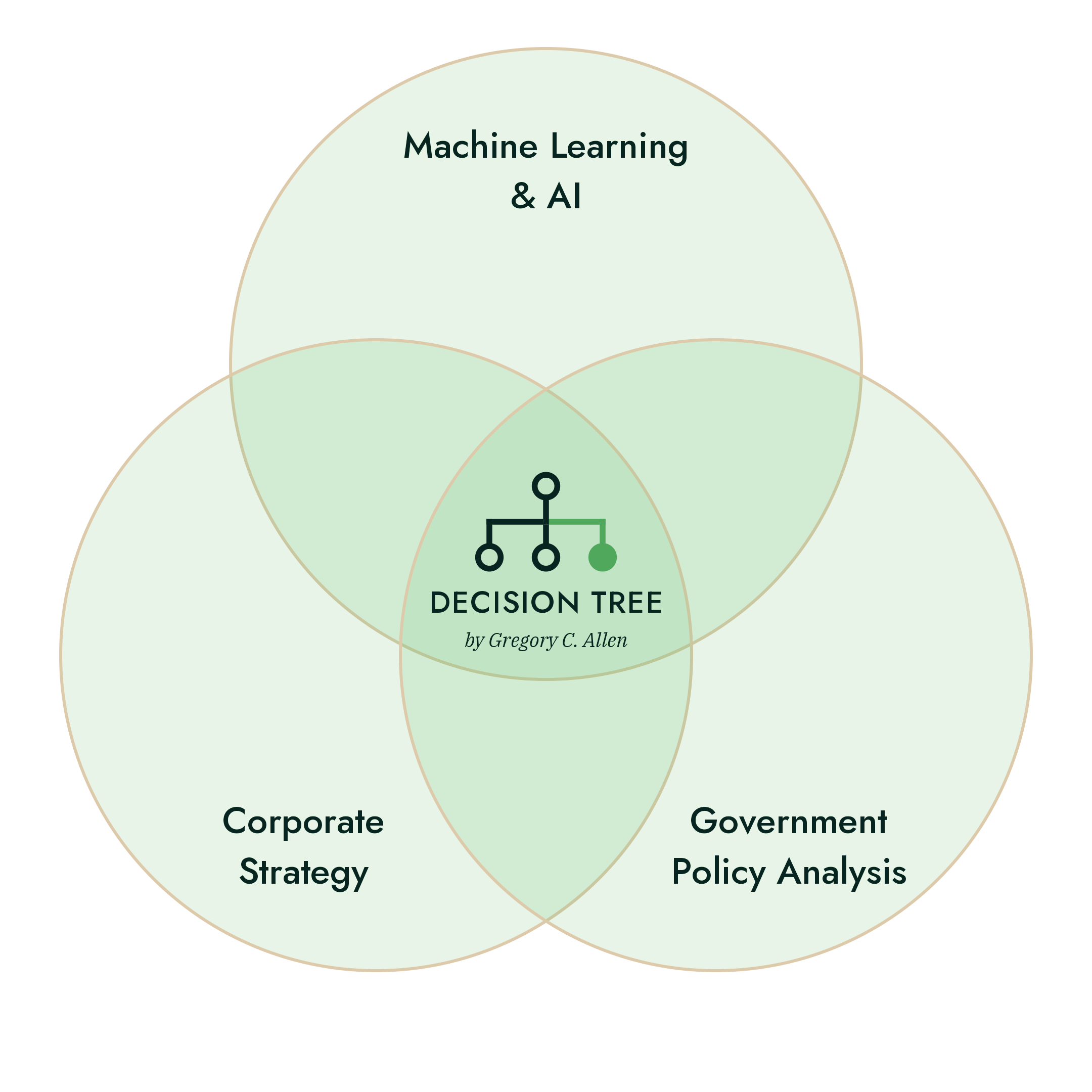
If you’re looking for evidence-based, insightful, and well-written analysis of how AI technology, government policy, and corporate strategy shape each other, you’ve come to the right place. Decision Tree focuses especially on AI, semiconductors, defense tech, and U.S.–China competition.
I also host The AI Power Podcast, with weekly episodes. Everything is free.
Why listen to me?
My work is motivated by a simple goal: helping the United States and its allies survive and thrive in a world being remade by AI.
Most AI policy researchers are policy specialists. Most semiconductor analysts are industry specialists. I’m one of the few people who’s done both. My career has always been at the intersection of corporate strategy, technology, and public policy.
My published research has been used by policymakers across four U.S. presidential administrations. From 2022-mid 2026, I led AI research at the Center for Strategic and International Studies (CSIS), including serving as the founding director of the Wadhwani AI Center. The Economist described my CSIS research on AI and semiconductor export controls as “very much at the center of U.S. policy.” Semafor called me “The most-watched U.S. analyst on the subject.”
I started my career more than 10 years ago doing corporate strategy work for organizations like NASA, Samsung Electronics, iRobot, and a handful of AI and robotics startups. For graduate school I did a dual-degree Master of Public Policy at Harvard Kennedy School and MBA at Harvard Business School. I also traveled extensively in China and published a report on how its AI ecosystem was developing across the technology industry, investor community, government, and military.
On behalf of the head of IARPA (spy community sister agency to the better-known DARPA), I wrote the first big report on the national security implications of the modern AI revolution. The report was ultimately published by the Harvard Belfer Center for Science and International Affairs in 2017.
I later joined the Department of Defense as it created the Joint Artificial Intelligence Center, then DOD’s flagship AI initiative. As Director of Strategy and Policy, I worked on DOD-wide AI strategy and participated in the first U.S.-China military-to-military dialogues on AI safety (which went poorly).
What do subscribers get?
Clear explanations of the AI policy fights, technical shifts, and government decisions that matter
Strategic analysis of U.S.–China competition, export controls, defense tech, and the semiconductor industry
Judgment about what matters and what does not, grounded in experience across government, industry, and think tanks
Occasional behind-the-scenes context on how policymaking actually works
Links to my latest research reports
The internet is full of AI takes. Decision Tree is for readers who want analysis that is informed, skeptical, strategic, and useful.
